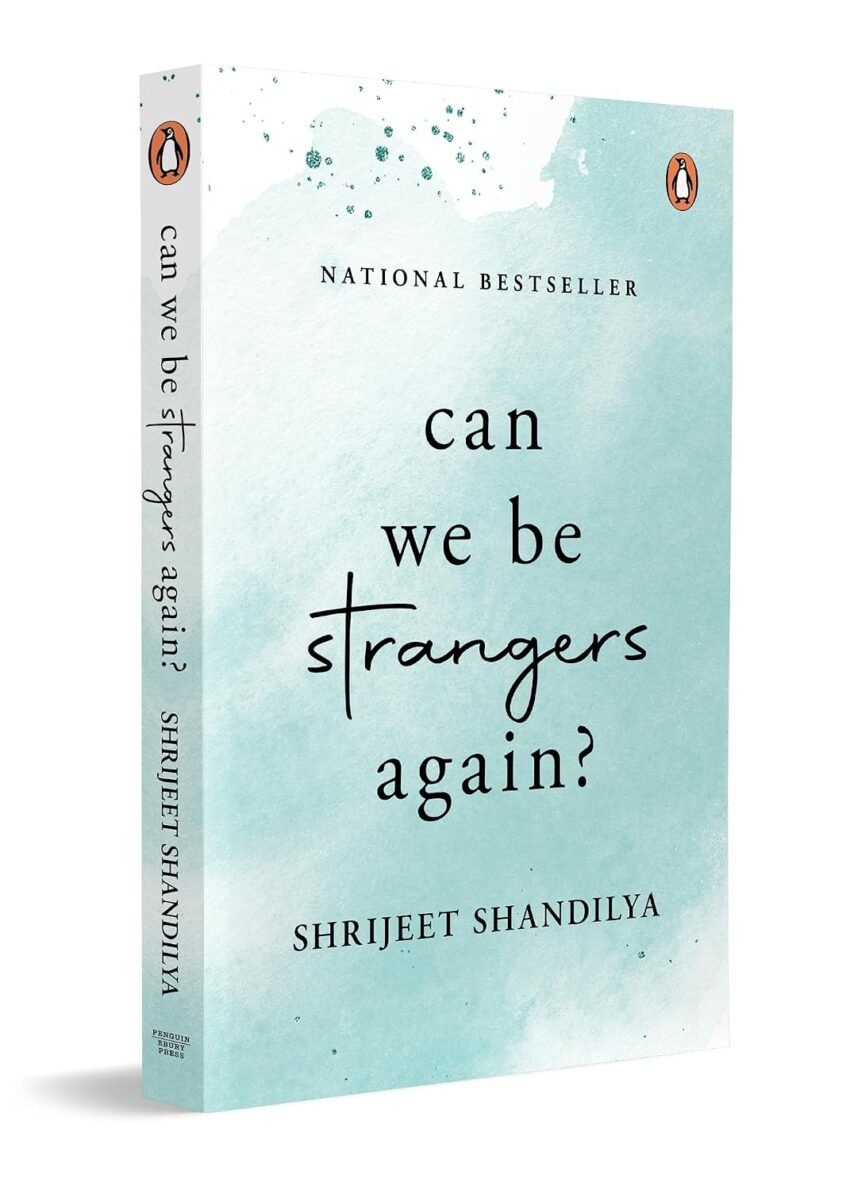
Introduction to Can We Be Strangers Again?
Can a relationship that once meant everything return to being nothing more than a memory? This question lies at the heart of Can We Be Strangers Again? a contemporary romance novel by Shrijeet Shandilya. Published by Ebury Press, an imprint of Penguin Random House India, the book explores the complicated relationship between friendship, love, trust and emotional separation.
The story begins in the familiar setting of college life, where friendships develop through shared experiences, late-night conversations and promises that may seem permanent at the time. However, when romantic feelings enter an existing friendship, relationships can change in unexpected ways. Misunderstandings, betrayal and difficult choices can leave people questioning whether the bonds they once valued can ever be repaired.
What makes this premise interesting is its emotional familiarity. Many readers understand the uncertainty of developing feelings for a friend, the discomfort of unspoken expectations or the difficulty of moving forward after a relationship ends.
In this review, we examine the book’s premise, central themes, intended audience, potential strengths and possible limitations. The aim is to help readers decide whether this romance novel fits their interests rather than simply repeat its promotional description.
Book Details and Publication Information
Before purchasing a book, readers should check its publication details and confirm that they are choosing the correct edition. The following information is based on the publisher’s listing and bibliographic records.
Title: Can We Be Strangers Again?
Author: Shrijeet Shandilya
Publisher/imprint: Penguin Random House India / Ebury Press
Paperback ISBN-13: 9780143475927
Paperback ISBN-10: 0143475924
Publication year: 2025
Listed length: 232 pages
Language: English
Genre: Contemporary romance / relationship fiction
Main setting: College life
Format: Paperback; other editions may be available
The ISBN is particularly useful when shopping online because different editions, formats and listings may have different identifiers. Check the product description before ordering to ensure the language, binding and edition match your preference.
About the Author: Shrijeet Shandilya
Shrijeet Shandilya is an Indian author whose writing explores relationships, memories, growing up and the emotional complications of everyday life. According to his publisher’s author biography, he completed his undergraduate studies at Christ University and pursued an MBA at Goa Institute of Management.
His writing combines elements of humour, nostalgia and romance, focusing on the feelings people experience as relationships change. Can We Be Strangers Again? is presented by the publisher as his debut novel.
The subject matter offers an opportunity to explore emotions that are often difficult to express directly. Friendship can provide comfort and familiarity, while romantic attachment can introduce new expectations and vulnerabilities. When those expectations are not shared, even a close relationship may become complicated.
For readers who enjoy contemporary Indian fiction, Shandilya’s college-life setting and relationship-centred premise may be appealing. His author’s biography provides useful context, although a proper assessment of his writing ultimately depends on the text itself rather than the author’s background alone.
What Is Can We Be Strangers Again? About?
At its core, Can We Be Strangers Again? is a story about the fragile boundary between friendship and romantic love.
The publisher’s synopsis introduces three friends whose close bond is disrupted when two of them develop romantic feelings. Betrayal changes their relationships, leaving emotional consequences for everyone involved. Dev faces the difficult question of whether love and trust are worth risking again.
Rather than treating romance as a simple journey from attraction to a happy ending, the premise focuses on what happens when affection becomes complicated by competing feelings and broken trust.
The title raises an especially compelling question: when two people have shared meaningful experiences, can they genuinely return to being strangers? They may stop talking, remove each other from their daily routines or try to move forward independently, but their memories remain part of their personal histories.
This makes the novel relevant to readers who enjoy relationship fiction that examines the emotional consequences of love rather than concentrating exclusively on romantic attraction.
Story Premise: When Friendship Turns into Love
Friendship often develops gradually. People become comfortable with each other, establish routines and learn to rely on one another. Romantic feelings can emerge from this familiarity, but they may also create expectations that were never part of the original relationship.
The premise of Can We Be Strangers Again? places this transition at the centre of its conflict.
When friendship becomes romantic, the people involved may interpret their shared experiences differently. One person may believe the relationship is becoming more serious, while another may struggle to understand their own feelings. Even when affection is genuine, differences in expectations can create tension.
The presence of three friends adds another dimension. A romantic development between two people can affect the third person’s emotional security and sense of belonging. What begins as a private relationship may therefore reshape an entire friendship group.
This is a strong foundation for contemporary relationship fiction because it allows personal decisions to have consequences beyond the central couple. The effectiveness of the premise depends on how convincingly the novel develops these consequences and how much room it gives its characters to explain their choices.
Overview of the Main Characters
The publisher’s synopsis identifies Dev and refers to the central group of three friends, but the available verified description does not provide a complete character-by-character account. This section therefore focuses on the roles established by the premise rather than inventing detailed biographies.
Dev: The Central Character: Dev is at the centre of the publisher’s description of the story. His emotional challenge involves deciding whether he is willing to risk love again after painful experiences.
This conflict raises questions about trust, vulnerability and the difference between wanting a relationship and feeling ready to participate in one.
A useful way to evaluate Dev as a character is to examine whether his decisions follow a believable emotional progression. Does he learn from what happens to him? Does he recognise his own mistakes? Does he respond to difficult situations with greater understanding, or does he repeat familiar patterns?
The Romantic Interest: The romantic relationship is central to the story’s emotional stakes. Its success depends on whether both people feel like individuals with their own motivations, boundaries and fears.
Readers may find the relationship more convincing when the characters communicate imperfectly but plausibly, rather than acting only to create dramatic twists.
The Third Friend: The third member of the friendship group gives the premise additional complexity. Their presence makes the story about more than a couple’s romantic journey: it also raises questions about loyalty, belonging and the damage that can occur when friendship and romance overlap.
The character’s importance depends on how fully the novel explores their perspective and whether their emotional experience receives meaningful attention.
The Role of Friendship, Love, and Betrayal
Friendship, love and betrayal form the central emotional triangle of the novel’s premise.
Friendship provides the original connection. It represents familiarity, shared memories and the expectation that people will remain present in one another’s lives.
Love changes the nature of that connection. Romantic feelings can deepen an existing bond, but they may also introduce jealousy, uncertainty and expectations that friends have never previously discussed.
Betrayal challenges the trust on which both relationships depend. It may leave people questioning not only another person’s intentions but also their own judgement.
An interesting question for readers is whether the novel treats betrayal as a single dramatic event or as the result of several decisions, misunderstandings and failures to communicate. The latter approach can create a more nuanced account of how relationships deteriorate.
The strongest relationship fiction allows readers to understand the characters’ motivations without automatically excusing their actions. That distinction is important when assessing whether the novel’s conflicts feel emotionally believable.
Story Summary Without Major Spoilers
Can We Be Strangers Again? begins with the social world of college life, where three friends share experiences and build relationships that appear secure. Their bond changes when friendship develops into romantic attachment.
As emotions become more complicated, the characters face difficult choices. The publisher’s synopsis indicates that betrayal disrupts the group, while conflicting feelings make it harder for the characters to determine what they owe one another.
The resulting conflict concerns more than whether a romance can survive. It also involves the question of whether people can preserve a meaningful friendship after trust has been damaged.
Dev’s decision about risking love again gives the story an additional emotional dimension. The possibility of another relationship must be weighed against the memory of previous hurt.
This summary deliberately avoids specific revelations, invented scenes and claims about the ending. Readers who want to experience the characters’ decisions firsthand can use the publisher’s description as a starting point before deciding whether to buy the book.
Major Themes Explored in the Novel
Several themes emerge from the novel’s published premise.
Love and emotional vulnerability: Love requires people to reveal feelings they might otherwise keep private. That vulnerability can bring people closer, but it also creates the possibility of disappointment when expectations are not shared.
The changing nature of friendship: A friendship may remain meaningful even when the relationship itself changes. However, maintaining that connection after romantic complications can require honesty, patience and acceptance.
Trust and betrayal: Trust is easier to establish when expectations are clear. When those expectations are violated, restoring the relationship may require more than an apology.
Memories and moving on: The title invites readers to consider whether people can genuinely become strangers after sharing important experiences. Moving forward does not necessarily mean erasing the past.
Growing up and making difficult choices: College life provides a setting in which people learn about their identities, emotional needs and responsibilities toward others. Relationships can become part of that learning process.
These themes give the book opportunities for emotional reflection. Whether each theme is explored deeply is something readers should judge from the full novel rather than from its synopsis alone.
Writing Style and Storytelling Approach
The publisher describes Shrijeet Shandilya’s writing as combining humour, nostalgia and passion. This provides a useful indication of the intended tone, although it does not establish that every part of the novel maintains the same balance.
For a relationship-focused novel, an effective writing style should achieve three things.
First, dialogue should sound natural enough to make the characters’ conversations believable. Second, emotional moments should develop through actions and interactions rather than relying entirely on explanations. Third, humour and lighter scenes should complement the serious parts of the story rather than interrupt them.
Readers can also examine whether the narration gives enough context for important decisions. A character’s behaviour may seem frustrating when their motivations are unclear, but it may become understandable when the story explores their fears and expectations.
The premise suggests a character-centred, emotionally focused approach. A definitive judgement about sentence quality, dialogue, prose originality or consistency would require examining the full text.
Character Development and Emotional Depth
Romance becomes more convincing when characters change in response to their experiences.
In Can We Be Strangers Again?, Dev’s willingness to risk love again provides a natural basis for examining emotional development. The important question is not simply whether he finds love, but whether his experiences influence how he understands trust and commitment.
The other characters also need room to develop. Their decisions should arise from understandable motivations rather than serving only as obstacles to the central relationship.
Readers evaluating character development can consider three questions:
– Do the characters have identifiable motivations beyond being in love?
– Do their choices produce believable consequences?
– Does the story allow them to acknowledge mistakes and change?
Emotional depth does not require every character to behave perfectly. In fact, flawed decisions can make a story more realistic when the narrative explores their consequences honestly.
Pacing, Readability, and Chapter Flow
The publisher lists the paperback edition at 232 pages, making it a relatively compact novel compared with many longer works of fiction.
However, page count alone cannot establish whether a book is fast-paced or easy to read.
A well-paced relationship novel needs room for both ordinary interactions and major emotional developments. If conflicts appear and disappear too quickly, readers may struggle to understand why the relationships matter. If the same disagreement is repeated without new insight, the story may feel unnecessarily prolonged.
When reading this novel, pay attention to whether transitions between friendship, romance and conflict feel natural. Also consider whether quieter moments provide useful insight into the characters or merely delay the main plot.
Practical buying advice: If you prefer shorter contemporary novels, the listed length may be attractive. If you prefer elaborate world-building, numerous subplots or extensive character histories, you may want to examine a sample before purchasing.
What Makes This Story Relatable to Young Adults?
Young adulthood often involves changes in friendship groups, educational environments and personal expectations. Relationships formed during college can become especially important because they develop alongside questions about identity and the future.
The novel’s premise draws on several experiences that younger readers may recognise:
– Developing romantic feelings for a friend.
– Worrying about losing an important friendship.
– Struggling to communicate expectations.
– Feeling uncertain about trust after disappointment.
– Learning that strong feelings do not always produce compatible relationships.
These experiences are not limited to a particular age group. Older readers may also connect with the story’s central questions, especially if they have experienced a relationship that changed unexpectedly.
The college setting gives the narrative a recognisable social context, while its focus on emotional consequences makes the premise relevant beyond college life.
What I Liked About Can We Be Strangers Again?
Rather than claiming personal reading experiences that have not been verified, the following points identify the most promising aspects of the book’s premise.
1. An emotionally engaging central question: The title immediately raises a question that readers can understand without needing extensive background information. Can two people return to being strangers after sharing an important part of their lives?
2. Friendship and romance are connected: The story does not begin with a conventional meeting between strangers. Its premise allows romantic developments to affect an existing social bond, creating more than one emotional stake.
3. A familiar setting: College life gives the story a recognisable context for exploring friendship, attraction, loyalty and difficult decisions.
4. Scope for emotional reflection: The subject matter encourages readers to think about trust, expectations and the difference between remembering a relationship and wanting to restore it.
5. Potential appeal to contemporary romance readers: Readers who prefer relationship-centred fiction may find the premise more appealing than stories focused primarily on action or elaborate external conflicts.
These are strengths of the concept. A final review should distinguish them from qualities that can only be established by reading the complete novel.
What Could Have Been Better?
A balanced review should consider possible limitations as carefully as potential strengths. The following are critical questions to investigate, not confirmed defects in the book.
Character motivations: Do the characters explain their decisions convincingly, or do important actions seem to happen simply to create conflict?
Relationship development: Does the transition from friendship to romance feel gradual and believable?
Treatment of betrayal: Does the story explore the consequences of damaged trust, or does it resolve serious problems too easily?
Originality: Does the novel offer a distinctive perspective on familiar romance themes, or does it depend heavily on recognisable genre conventions?
Emotional repetition: Are emotional scenes meaningfully developed, or do similar misunderstandings recur without advancing the characters?
Resolution: Does the ending provide a satisfying conclusion to the questions raised by the story?
These questions are useful for prospective readers and help prevent an unbalanced review. Without verifying the full text, it would be misleading to present any of these potential weaknesses as established facts.
Memorable Ideas and Lessons from the Story
The following are reflections prompted by the book’s themes, not direct quotations or claims about exact passages in the novel.
Love and compatibility are not the same thing: Two people may care deeply about each other and still struggle to meet one another’s needs.
Friendship deserves honesty: When romantic feelings develop within a friendship, clear communication can help prevent assumptions from becoming sources of conflict.
Trust requires accountability: Repairing a relationship involves understanding what went wrong and taking responsibility for one’s actions. An apology alone may not restore confidence.
Moving on does not erase memories: A relationship can remain significant even after it ends. Accepting that significance does not necessarily mean returning to the past.
Boundaries can be part of healing: Sometimes people need distance to understand their feelings and regain emotional stability. That distance need not mean that the relationship never mattered.
These ideas are useful starting points for reflection, whether or not a reader ultimately enjoys the novel.
Is Can We Be Strangers Again? Worth Reading?
Whether the book is worth reading depends on what you expect from contemporary romance.
It may be a suitable choice if you enjoy stories about college relationships, friendship turning into love, difficult emotional choices and the aftermath of damaged trust. Its central premise also offers a clear entry point for readers who prefer relationship drama over complex external plots.
You may want to consider other options if your main interests are fast-moving thrillers, fantasy settings, extensive world-building or romance with a strong focus on comedy and lighthearted situations.
The publisher’s description establishes the story’s broad direction, but it cannot guarantee that every reader will find the characters convincing or the ending satisfying.
My recommendation: Consider reading an authorised sample before buying. If the opening chapters appeal to you and you enjoy emotionally driven contemporary romance, the paperback is worth considering.
Who Should Read This Book?
Readers of contemporary Indian romance: Those interested in modern relationship stories set in familiar social environments may appreciate the premise.
College students and young adults: Readers who enjoy stories about friendship groups, first relationships and emotional uncertainty may find the themes relatable.
Readers who enjoy reflective fiction: People who like considering why relationships change may be drawn to the question raised by the title.
20. Who Might Not Enjoy This Book?
The novel may be less appealing to readers who:
– Prefer action-driven plots with frequent external events.
– Want a lighthearted romance with minimal emotional conflict.
– Dislike relationship misunderstandings or stories involving betrayal.
– Prefer complex literary fiction with extensive experimentation in narrative form.
– Expect a review to guarantee a happy ending before they decide to buy.
These are matters of taste rather than objective shortcomings. A novel that feels emotionally engaging to one reader may feel overly dramatic or familiar to another.
Can We Be Strangers Again? Book Review:
Can We Be Strangers Again? by Shrijeet Shandilya presents an emotionally recognisable premise about the changing boundaries between friendship and love. Its college setting, complicated relationships and questions about betrayal give the story a clear place within contemporary romance.
One of its most appealing features is the question raised by its title. People can end a relationship, but ending contact does not necessarily remove the memories or feelings associated with it. Exploring that difference gives relationship fiction an opportunity to examine emotional growth, trust and acceptance.
The book may appeal particularly to readers who enjoy Indian contemporary romance and stories in which personal relationships drive the narrative. However, its suitability depends on individual preferences and how convincingly the full text develops its characters and conflicts.
Final verdict: This is a book worth considering if its central relationship dilemma appeals to you. The premise is promising, but a definitive judgement on the writing and overall reading experience should be based on the complete novel.
Frequently Asked Questions
Q1. What is Can We Be Strangers Again? about?
It is a contemporary romance novel about three friends whose relationships change when friendship develops into love. Betrayal and conflicting emotions complicate their bond, while Dev faces the question of whether he is willing to risk love again.
Q2. Who wrote Can We Be Strangers Again?
The novel was written by Shrijeet Shandilya, an Indian author whose writing explores romance, nostalgia, humour and the emotional experiences associated with growing up.
Q3. Who published the book?
The publisher lists Ebury Press, an imprint of Penguin Random House India.
Q4. How many pages does the book have?
The publisher lists the paperback edition at 232 pages. Page counts can vary between editions and catalogues.
Q5. What is the ISBN of the paperback edition?
The paperback ISBN-13 is 9780143475927, and its ISBN-10 is 0143475924.
Q6. Is this book suitable for young adults?
Its college-life setting and relationship-focused themes may appeal to young adults. Readers should check an authorised sample and available content information to determine whether the subject matter suits their preferences.
Q7. Is the book a romance novel or a friendship story?
It combines both. Friendship provides the original connection, while romantic feelings and betrayal create the central relationship conflict.
Q8. Is this a spoiler-free review?
Yes. The review discusses the published premise and broad themes without revealing an ending or inventing specific plot events.
Q9. Is Can We Be Strangers Again? available in paperback?
Yes. The publisher lists a paperback edition, and the book is also listed by online booksellers. Availability and prices may change.
Q10. Where can I buy Can We Be Strangers Again? online?
You can start with the publisher’s official book page or check the Amazon India listing provided below. Confirm the edition, seller and current price before placing an order.
Q11. Is this review based on a complete personal reading?
No. This draft is based on verified bibliographic information, the publisher’s synopsis and critical analysis of the book’s premise. It does not claim that the reviewer has read the complete novel.
Q12. Can I add Amazon and Flipkart affiliate links to this review?
Yes. You can add your approved affiliate links near the buying section, provided you follow the applicable affiliate-program terms and clearly disclose the commercial relationship.
Book Specifications and Edition Details
Full title: Can We Be Strangers Again?: A National Bestseller
Author: Shrijeet Shandilya
Imprint: Ebury Press
Publisher: Penguin Random House India
ISBN-10: 0143475924
ISBN-13: 9780143475927
Publication year: 2025
Format: Paperback
Listed page count: 232
Language: English
Listed maximum retail price: ₹299
Genre: Contemporary romance
Primary setting: College life
Note: The ₹299 MRP is the price shown in the publisher’s listing, not a guarantee of the current selling price. Retailer discounts, delivery charges and availability may differ.
Where to Buy Can We Be Strangers Again? Online
Readers can compare the available buying options before choosing an edition. The links below include the publisher’s official listing and the Amazon product URL supplied for this review.
Can We Be Strangers Again?
Shrijeet Shandilya · Paperback · ISBN 9780143475927
Amazon India [Check Price on Amazon India]
Flipkart [Check Price on Flipkart]
Final Recommendation for Potential Readers
If you enjoy contemporary romance that examines friendship, emotional vulnerability and the consequences of broken trust, Can We Be Strangers Again? deserves a place on your reading shortlist.
The novel’s central premise raises a relatable question about whether a relationship can return to its original state after love changes it. That question may be especially appealing to readers who prefer stories about personal decisions and emotional consequences.
Before purchasing, review a sample and confirm the edition that suits you. This is the fairest way to determine whether the author’s voice and storytelling approach match your reading preferences.
Recommended for: Readers interested in contemporary Indian romance, college relationships and friendship-to-love stories.
Purchase advice: Compare prices, check the paperback ISBN and use a retailer you trust.
Copyright Notice and Disclaimer
This article is original review commentary prepared for publication. The book’s title, author name, ISBN and factual bibliographic information are included for identification purposes. The novel itself remains protected by the rights applicable to its author and publisher.
This review does not reproduce the complete book, substantial passages, or copyrighted dialogue. Any cover image, publisher artwork or retailer-provided image should be used in accordance with the relevant rights and platform terms. Do not assume that an image is free to reuse merely because it appears in a search result.
Affiliate Disclosure
This article may contain affiliate links to online retailers, including Amazon and Flipkart. If you purchase through an eligible affiliate link, we may earn a commission at no additional cost to you. Affiliate relationships do not guarantee a positive review or recommendation. Prices, availability and terms are determined by the respective retailers.